

Fire to Feast: Cooking Our Way Through Amazing History
Historical Cooking Activities: From Stone Age to Viking Feasts

While I truly love all aspects of outdoor cooking, it is the chance to research and deliver historical cooking activities for schools that really excites me. Fire, many would argue (myself included!), is the single most important invention of humankind. The ability to cook, bake, smoke and preserve food meant that, as a species, we were able to grow from small groups of hunter-gatherers dotted across the globe to where we are today.
This article explores the recipes, ingredients and cooking techniques of times past that still influence how we cook today, while sharing ideas for historical cooking activities that can bring these periods to life.
Cooking Like Our Ancestors
Stone Age Cooking
Back to where it began! Stone-Age techniques are not just historical cooking activities to be shared within a history lesson, they really are the backbone of all that we do today. From a personal point of view whenever I am asked to run a school workshop, in many ways this excites myself and pupils the most. While it requires a little more preparation, it is the one workshop where I get to leave all my cast iron equipment at home!
Stone age techniques are in the main incredibly simple, but when using such historical cooking methods a little more attention maybe required. With analogue -style high end restaurants such as Ekstedt, Noma and Knystaforsen being reknowned as some of the best in the world, this primitive style of cooking is big on flavour.
How to cook stone age style: the very beginning
When I first started planning Stone Age cooking workshops, one of the biggest challenges was the lack of written records. Apart from a few ancient depictions of fire, there were no cookbooks or recipes to follow. Much of what we do today is based on experimental archaeology, using evidence from the period to make informed guesses about the foods and cooking methods people may have used. Mammoth, unfortunately, is out of the question!
At some point in prehistory, humans discovered how to use fire for cooking and smoking food. There are many theories, myths and legends about how this happened. I have my own theory.
Perhaps, thousands of years ago, a forest fire left behind animals that had been caught in the flames or smoke. When our hunter-gatherer ancestors returned, they may have discovered that the remains were not only edible but had also been changed by the heat and smoke. Could experiences like these have helped inspire people to deliberately create fire and experiment with cooking?
Whatever the true story, cooking with fire changed the way humans lived. Bringing things back to the modern day, one of the biggest differences when recreating Stone Age cooking is the amount of fire you need. The cast-iron equipment I use in many of my other workshops becomes redundant when authenticity is the goal. Instead, you need plenty of wood and a good supply of hot embers.
Even something as simple as cooking a small steak directly on embers requires a substantial bed of them rather than a small pile. As soon as the meat hits the embers, it will cool them considerably. The trick is to have plenty of hot embers and keep moving the meat until it is cooked to your liking.

There are many ways to recreate prehistoric cooking. For me, the key is to immerse yourself in nature and ask a simple question: without modern tools and equipment, how could you cook this? In an outdoor setting, nature often provides the answer.
Sticks and Stones
Sticks can be surprisingly useful. They can be fashioned into skewers, tripods for suspending meat using natural cordage, or, if you’re feeling ambitious, even a simple Asado-style grill.
A few things are important to remember:
- Use fresh green wood. Dry wood has little flexibility and can burn easily.
- Avoid softwoods such as conifers, as their sap can spit and taint food.
- When using wood as a skewer, remove the bark and make sure the wood is clean and suitable for cooking.
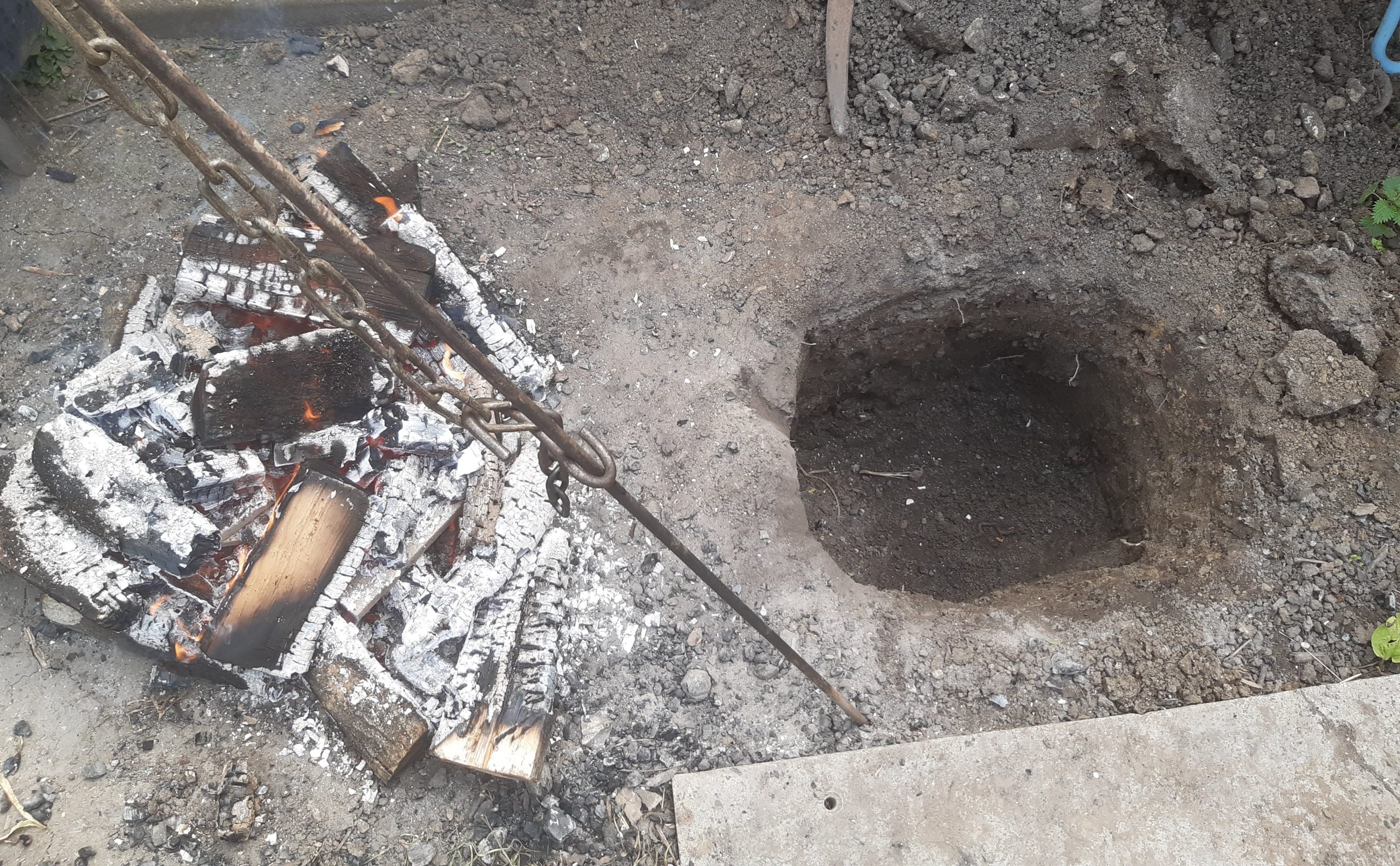
Stones have their own range of uses and can even provide a fascinating opportunity to explore geology alongside history. Heated stones can retain warmth for a long time, allowing you to experiment with griddling, baking, heating water and, with considerable preparation, pit roasting.
When using stones around a fire, safety is essential. Some rocks can crack or even break apart when heated. In a practical workshop setting, choosing suitable stones and managing the fire carefully are just as important as the cooking itself.
Stone Age cooking activities.
I have explored a whole range of Stone Age recipes and cooking methods in my workshops, including:
- Fish cooked on sticks
- Venison skewers
- Bere bannocks
- Herbal teas
- Pit-roasted lamb
- Asado-style venison
You can explore the recipes and ideas in more detail on the Stone Age cooking page.
Ancient Egyptian Cooking
While there are many amazing ancient civilisations to research and study, Ancient Egypt features in the curriculum of nearly every school. It is well resourced and we have plenty of written records. It also captures the imagination and is simply great fun to teach.
However, despite leaving behind wonders of the world, mathematical calculations and countless fascinating artefacts, the Ancient Egyptians didn’t leave us a recipe book!
All is not lost, though. Among the hieroglyphs, archaeological evidence and tombs, we have plenty of clues about the foods they had available. These included:
- Onions
- Leeks
- Chickpeas and other legumes
- Dates and other dried fruits
- Honey
- Garlic
- Wheat, including ancient varieties such as emmer
What could the Ancient Egyptians have eaten?
As with Stone Age cooking, recreating Ancient Egyptian food involves some experimental archaeology. However, this advanced civilisation had access to clay ovens, pottery vessels and more sophisticated cooking equipment. This opened up many more possibilities for baking, boiling and stewing.
On my Ancient Egyptian recipes page, I’ve developed several dishes based on ingredients and cooking methods that could have been available at the time.
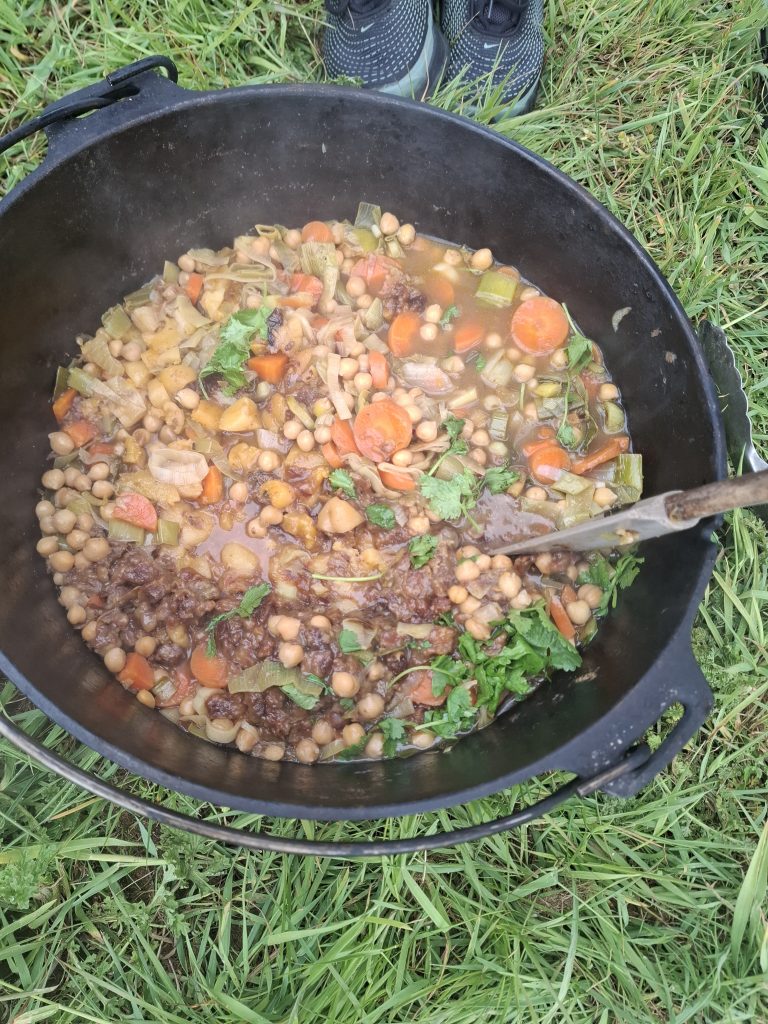
One of my favourites is a root vegetable and chickpea stew. It’s simple to prepare, full of flavour and works beautifully when cooked over a fire.
Bread would undoubtedly have been an important part of the Ancient Egyptian diet. Alongside flatbreads, naturally fermented breads may also have been possible. Ancient Egyptians cultivated emmer wheat, giving us an interesting opportunity to explore the breads they may have made thousands of years ago.
One particularly intriguing modern story concerns grain said to have been discovered in an Egyptian tomb. It was later cultivated in the United States and became associated with the name “King Tut’s Wheat”. Some versions of this story are disputed, but ancient Egyptian wheat still provides a fascinating starting point for experimenting with historic breads.
You can explore more recipes and the history behind them on my Ancient Egyptian recipes page.

Roman Cooking: From the Mediterranean to Britain
The Romans had a huge influence on food and farming in Britain. They brought new ingredients, cooking techniques and Mediterranean influences with them.
Here in the South East of England, where I live, the Roman period saw extensive agricultural communities develop. Crops such as spelt were grown in areas including the Darenth Valley.
Roman cooks had access to a surprisingly wide range of equipment. Skilled potters made pottery cooking vessels, while metalworkers produced pots, pans, skewers and spits. Food could be boiled, baked, grilled or cooked over an open fire.
The Roman Empire also created a huge network of trade routes. Ingredients and flavours could travel vast distances. This brought influences from across Europe, North Africa and the eastern Mediterranean into Roman kitchens.
 What would the Romans have eaten?
 What would the Romans have eaten?
What ended up on the table depended heavily on wealth and social status. Wealthy Romans could enjoy a wide variety of meats, fish, spices, fruits and imported ingredients.
Ordinary people relied much more on grains, pulses and vegetables.
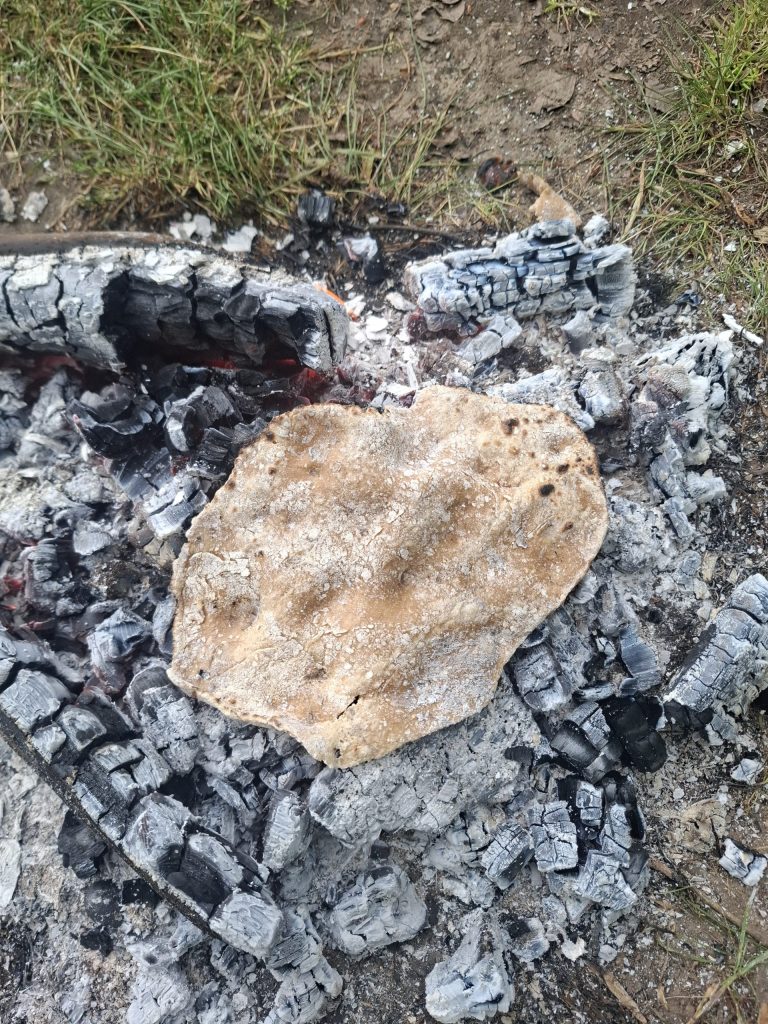
Spelt, an ancient variety of wheat, was particularly important. People could grind it into flour and use it to make bread and other simple foods. Mixed with water, the flour could also make a basic flatbread. This could then be cooked directly on hot embers — the ultimate Roman fast food!
Roman cooking also gives us some fantastic opportunities for practical school activities. In my workshops, children can explore Roman ingredients and cooking techniques by preparing dishes such as Roman-style meatballs.
Cooking them over a fire adds another dimension to the experience. Children move beyond simply learning about Roman history and get to experience a small part of it for themselves.
You can explore more Roman recipes and ideas for historical cooking in my Roman recipes section.
Spelt is a high growing derative of wheat that likes long hot mediterranean summers, producing a highly nutricious grain for bread, this was said the be the grain that fed the Roman army as it marched through Europe. Mixed with water this could easily be turned into a flatbread to cook on hot embers, the ulitmate fast food!
Roman cooking also gives us some fantastic opportunities for practical school activities. In my workshops, children can explore Roman ingredients and cooking techniques by preparing dishes such as Roman-style meatballs and cooking them over fire. It is a chance to move beyond simply learning about Roman history and experience a small part of it for themselves.
You can explore more Roman recipes and ideas for historical cooking in my Roman recipes section.
Saxon and Viking Cooking: Food, Fire and Feasting
For me, this is where it all began.
One of my classes was studying Vikings and asked a simple question: what did they eat?
Knowing a little about me, they probably weren’t surprised when I thought this was the perfect opportunity to run my first historical cooking activity using fire.
Cooking Like the Vikings
Much of what we imagine when we think about Viking cooking involves men gathered around great fires and cauldrons. The reality was more complex, but cooking over fire was certainly an important part of everyday life.
As I extended my research, I discovered that Saxon and Viking cooking was much more about grains, vegetables and other plant foods than the feasting imagery might suggest.
Meat was valuable. Livestock represented an important source of wealth as well as food.
This means the everyday Saxon and Viking diet was probably much more varied than the image of endless meat and feasting suggests.
What Did the Vikings and Saxons Actually Eat?
The early medieval period, previously referred to as the Dark Ages — certainly when I was a boy — had a generally cooler climate than today.
This affected what people could grow successfully. Hardy crops such as oats and barley were particularly important.
Other foods included:
- Oats and barley
- Rye
- Root vegetables such as turnips
- Leeks and onions
- Peas and other pulses
- Fish and other locally available foods
- Meat and dairy products when available
Food preservation was also important. People could smoke, salt and dry meat and fish to help them last through the winter months.
 Saxon and Viking Pottage

Many of these ingredients could be combined in simple stews and pottages. If meat was available, cooks could add it to the pot. However, a pottage could also provide a filling meal using mainly grains, vegetables and herbs.
If the pot was running low, cooks could simply add more water to make the food go further.
One such dish is very popular in my school outdoor cooking workshops. My Saxon-style pottage is essentially a hearty stew thickened with oats and cooked over an open fire.
You can find the pottage recipe, along with a number of other Viking and Saxon recipes on the Wild Classroom website.
Historical Cooking Activities For Primary Schools
 As a teacher, I am always looking for ways to engage and enthuse pupils with their learning. In my experience, anything that gets children out of the classroom and actively involved tends to make a lasting impression.
While I truly love all aspects of outdoor cooking, seeing pupils engage with the tasks, ingredients and tastes of yesteryear is something rather special. They aren’t simply learning about the past. They are handling the ingredients, using the cooking methods and experiencing the food for themselves. In a very real sense, they can taste the past.
A Stone Age session might involve cooking directly on hot embers or making simple bread. An Ancient Egyptian workshop can explore grains, vegetables and bread making. Roman cooking opens up conversations about farming, trade and the vast empire that connected Britain with the wider world.
For Saxon and Viking sessions, children can discover how people used local ingredients to create filling meals such as pottage. They can also explore how people preserved food before fridges and freezers existed.
This hands-on approach makes history much more than something found in a textbook. These historical cooking activities give pupils the chance to experience history rather than simply read about it. Children work together, solve practical problems and discover how much effort went into preparing a meal before modern kitchens and appliances.
For me, that is the real magic of historical cooking. When children can make it, cook it and taste it, the past suddenly feels much closer to them.
Cooking Through History With Wild Classroom
At Wild Classroom, I use food and fire to engage pupils of all ages and abilities. My historical cooking activities combine practical experiences with meaningful curriculum learning. A passionate believer in learning through doing, I make every workshop hands-on, engaging and tailored to your pupils’ abilities and curriculum needs.
My own experience as a classroom teacher means that other areas of the curriculum can be naturally embedded throughout each session. Whether we are exploring history, science, geography or food, the learning happens alongside the practical experience.
I bring the same mantra to my workshops that I had as a class teacher, asking pupils two simple questions:
1. Have you learnt something new today?
2. Have you had fun?
If the answer to both is yes, then I feel I have succeeded too.
To find out more, please visit our schools page or get in touch!

Follow
Contact
scott@wildclassroom.co.uk
07939 669365